
🔍
The Scenario
Finding a pet is an extremely involved and time-consuming process, especially for young adult first-time pet adopters who are unfamiliar with the entire process. It involves numerous steps: from choosing your desired pet breed, learning about pet care, visiting shelters, aclimitzaing your pet... The list goes on.
⚠️
The Problem
How can we develop a solution that streamlines the pet adoption process, providing assistance to young, first-time, pet adopters?
💡
The Solution
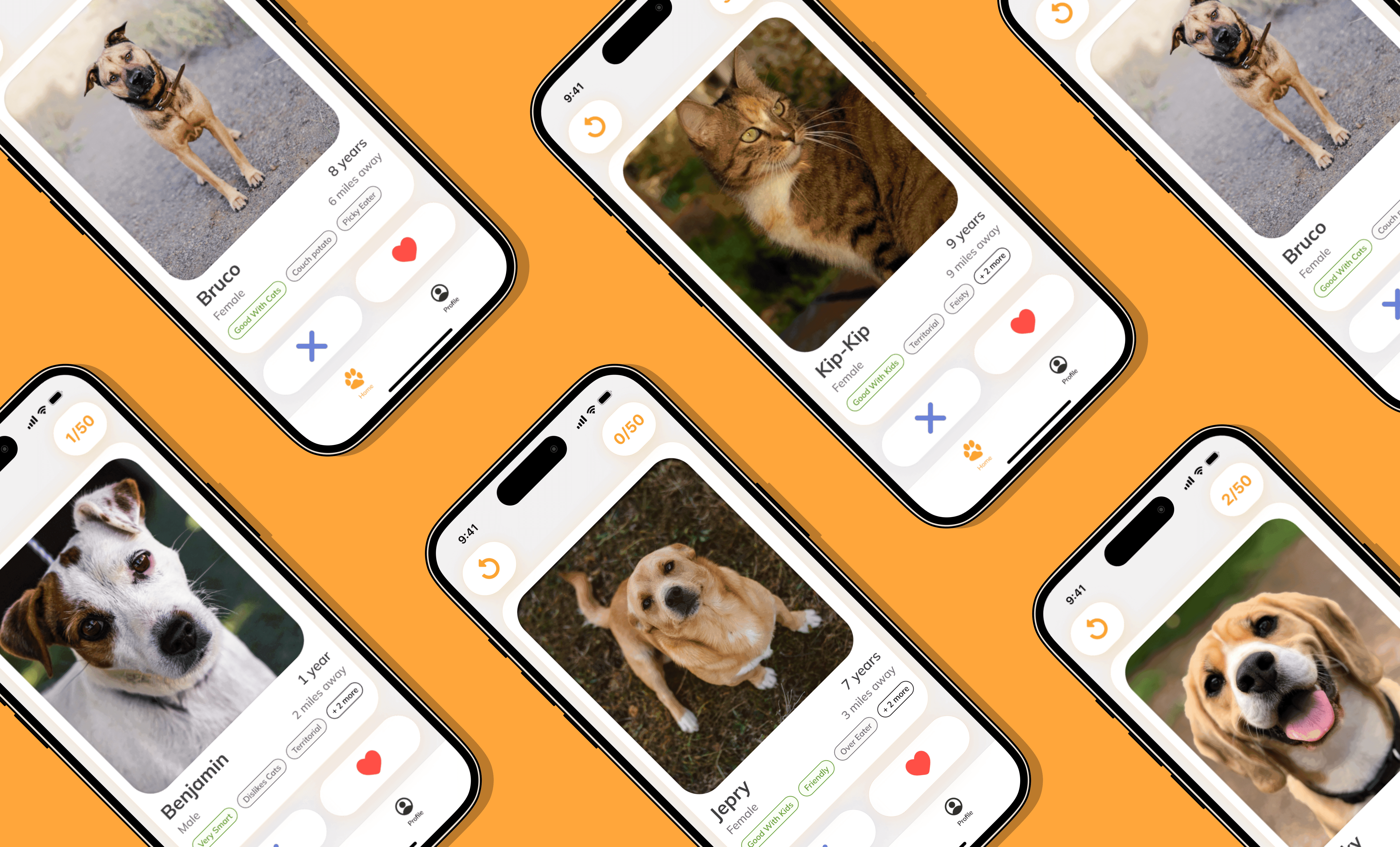
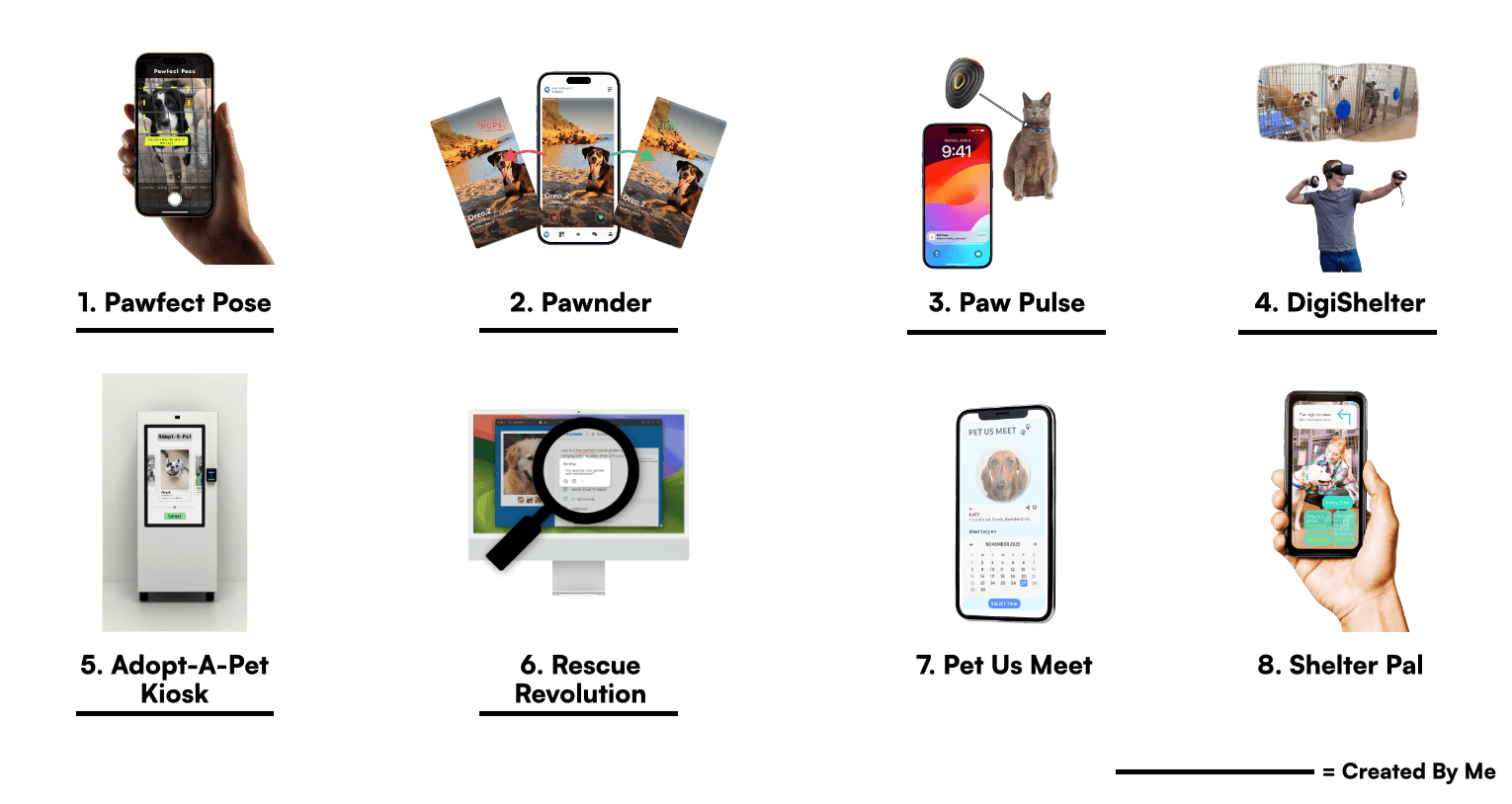
First-time, young adult, pet adopters noted that although adoption agencies make use of technology, they are often poorly designed and not well implemented. As such, a dating-style application that utilizes familiar swiping gestures to select pets was designed - streamlining the pet selection process.
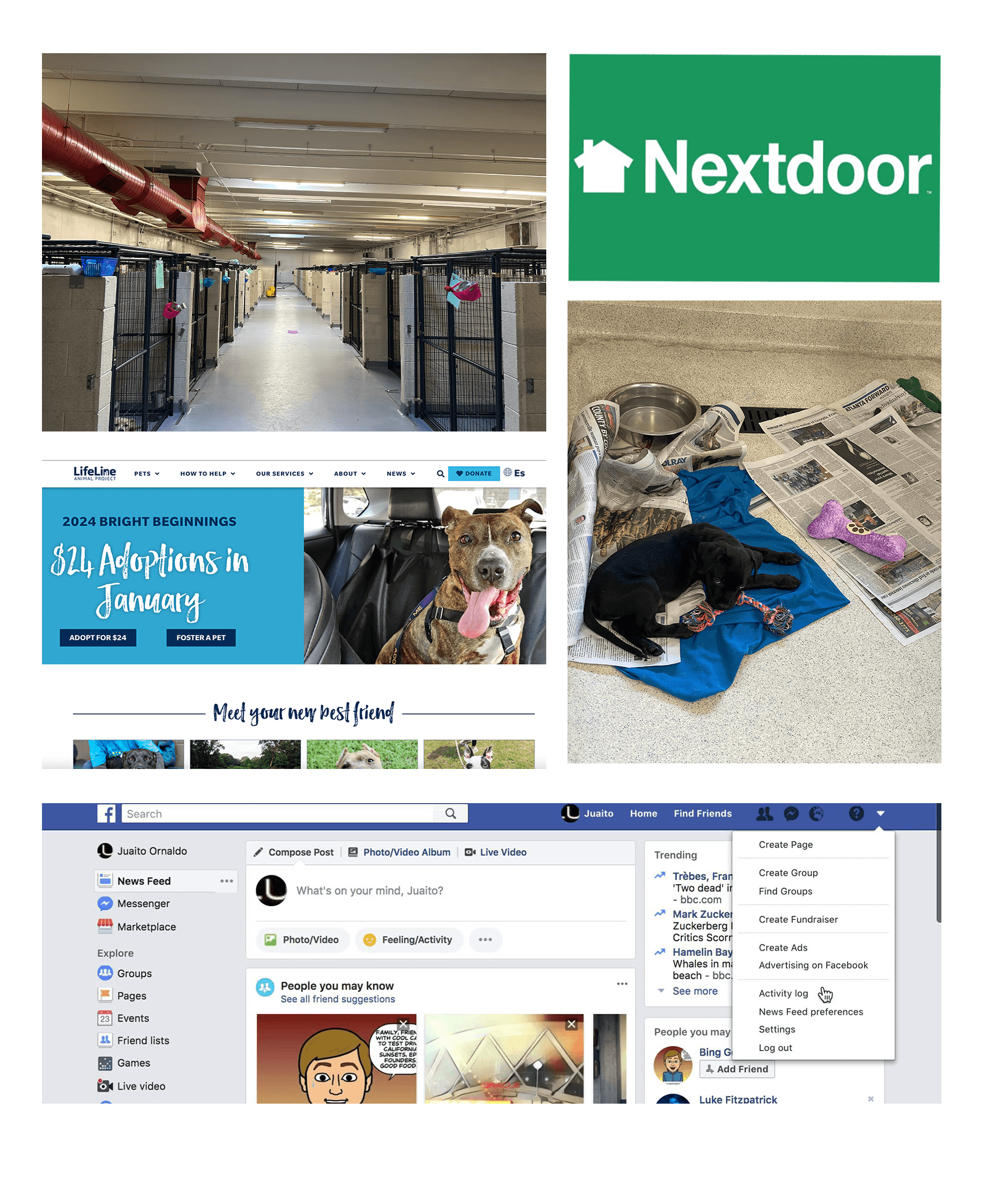
1. Traditional Shelters
In-person shelter adoption involves potential adopters navigating through individual stalls to choose a pet, creating an environment for personal interaction and discovery. While this approach suits some, it can be overwhelming or discouraging for others because of the odors and loud noises.
2. Adoption Websites
Adoption websites play an important role in the adoption process, displaying adoptable pets to adopters, allowing them to view these pets from anywhere they wish. However, potential adopters still need to go to a shelter to actually adopt the pet.
3. Neighborhood Applications, 4. Social Media Channels, & 5. Word of Mouth
While more informal, these adoption methods are often done among individuals with pre-existing connections. This ultimately fosters a heightened sense of trust between adopters and those giving away the pet, promoting increased transparency in understanding the pet's behavior.




31%
My Thoughts On The Project
This project marked my first experience with Figma and a comprehensive journey through the UX design process. As such, it provided invaluable insights into the intricacies of user-centered design.
I learned the importance of prioritizing core features to maintain clarity, embracing iterative design through user feedback, and effectively communicating design decisions with team members and potential users.
This project not only enhanced my proficiency in Figma but also reinforced the significance of empathy, adaptability, and clarity in creating user-centric solutions.